
Vomiting and Diarrhoea in Dogs and Cats
Is it normal for my dog or cat to vomit or have diarrhoea?
Vomiting and diarrhoea are not normal symptoms for dogs and cats. While very intermittent vomiting or diarrhoea, such as hairballs in cats or dogs eating things they shouldn't, often resolves quickly, any repeated or extended episodes of gastrointestinal signs need to be addressed by a vet. Some of the potential causes of vomiting and diarrhoea are gastroenteritis, pancreatitis, foreign body ingestion, liver disease, parasites, bacterial infections and many more.
When is vomiting or diarrhoea an emergency?
Please call us straight away, or an emergency hospital if we are closed, if your pet is vomiting repeatedly, can't keep water down, has blood in their vomit or poo, has a swollen or painful tummy, is very flat, or you think they may have eaten something like chocolate, a toy, a corn cob, bones or rat bait.
How do vets find out why my pet is vomiting?
We are able to quickly diagnose and treat vomiting and diarrhoea, and as always this begins with a promptly available consultation with one of our vets, who will collect a full history, perform a physical examination and decide what to do next. They may be able to provide treatment straight away, but sometimes more information is needed to find the cause of the symptoms. For animals with vomiting and/or diarrhoea this may include:
- Blood tests: these are a really high yield diagnostic test with little stress for the animal, and can check the liver, pancreas, kidneys, white blood cells and electrolytes, which tells us a lot about what could be causing the vomiting. Our in house machine gives rapid results and we have a reliable external laboratory for more specialised tests.
- Faecal testing: by testing your pet's poo we can see if there are any infections that might be causing diarrhoea. We can do this both on our specialised AI analyser at the hospital or using genetic tests provided by our external laboratory.
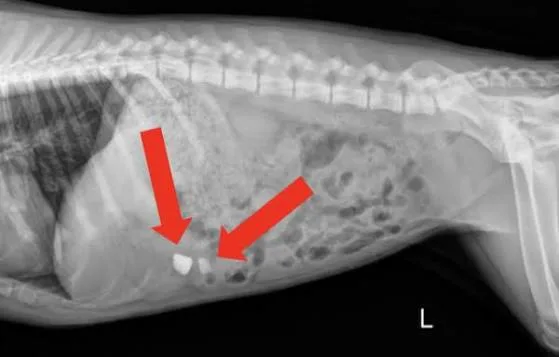
- X-rays: x-rays are indicated when there is suspicion that your pet may have an obstruction. We have full digital x-ray facilities in house for this purpose, as well as the ability to instantly refer images to a specialist radiologist if needed, although our vets can interpret most x-rays in house.
- Ultrasound: we have a human grade ultrasound machine which we can use to perform detailed examinations of individual organs such as the liver and pancreas to get more information.
How is vomiting and diarrhoea treated?
Piecing together this information usually results in a definitive diagnosis, which then enables us to provide a personalised treatment plan for your dog or cat. This might be as simple as some medication administered in clinic or at home, and this may be enough to make them feel better again. However, with more serious diagnoses we can provide hospitalisation with us on IV fluids, or in some cases we may need to operate in our dedicated theatre where surgery is the best option. Whatever the problem causing your pet's vomiting and diarrhoea, we have the tools and knowledge to get them feeling better again.